Honouring Eight Decades of Global Unity and Progress
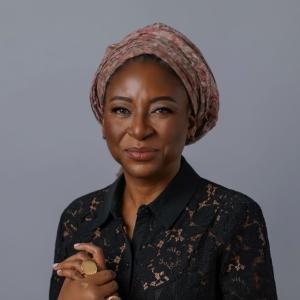
UN80 Anniversary Speech by Funmi Balogun, UN Resident Coordinator in Timor-Leste

Excellency, President of the Republic and Nobel Laureate, Dr José Ramos-Horta,
Excellency, the Minister of Foreign Affairs and Cooperation, Mr. Bendito Freitas,
Excellencies, Ministers, and Members of Government,
Excellencies, Ambassadors, Heads of Missions and Representatives of UN Member States,
My United Nations colleagues,
Distinguished guests, ladies and gentlemen,
Boa tarde and good evening.
It is with utmost pleasure that I welcome you to the UN Day celebrations today, on behalf of my UN Country Team colleagues, representing 21 UN agencies working in Timor-Leste, to commemorate the 80th anniversary of the founding of the United Nations. The signing of the UN Charter in October 1945 represented a hopeful chapter in the world’s history, after the devastating ruins of the 2nd World War and reflected founding nations commitment to building a new multilateral system, anchored in peace, dignity and cooperation. What began with 51 countries has grown into a truly global forum shaped by the hopes and experiences of all nations, representing the aspirations of their citizens and where all voices are heard.
Marking this milestone reminds us not only of what humanity has endured but also of the progress that solidarity has made possible. A global human rights system took form, through the universal declaration of human rights, that declared all persons as equal, with inherent human rights and one we commemorate today, 10 December, the Human Rights Day and of course, the final day of the 16 days of activism against violence against women and girls.
In the last 80 years, dozens of nations reclaimed their sovereignty, rising against colonialism and apartheid. Diseases were defeated, education reached millions more families, including women and girls who were previously denied, poverty declining with millions more with disposable income and societies saw gains in human rights, equality and democratic participation. These achievements were built on the conviction that countries advance further when they act together in the spirit of multilateralism.
Few nations embody the principles of the UN more deeply than this beautiful country of Timor-Leste. The courage that secured its independence, the commitment to human rights and the daily work of building a peaceful, democratic future all echo the ideals that inspired the Charter eighty years ago.
The past year also brought moments of profound significance. The historic visits of late Pope Francis and the United Nations Secretary-General reminded the world of Timor-Leste’s role as a champion of peace, compassion and multilateral cooperation. These moments strengthened the country’s voice on the global stage and affirmed its enduring commitment to shared humanity.
And we have all seen the transformative progress. Life expectancy has risen. Girls and boys now enter school in equal numbers. Child mortality has been cut by half. Poverty has fallen. Women hold 38 per cent of seats in Parliament. Electricity reaches 96 per cent of households. Communities are better prepared for climate risks.
Over more than two decades, the United Nations family has been a partner to the people and Government of Timor-Leste on their journey from independence to development. From peacekeeping and state-building to today’s focus on inclusive growth and resilience, our partnership has remained aligned with the Strategic Development Plan and the Sustainable Development Goals.
Despite global financial constraints, UN agencies continued to partner with government to deliver meaningful results through resource mobilization, strategic policy advice and support in the development and joint implementation of innovative projects to deliver services to those often left behind. Last year, UN mobilized over 58 million dollars from development partners in Timor-Leste to strengthen primary healthcare, maternal and newborn services, digital health, early childhood development, school readiness, teacher training, nutrition and social protection. Investments in climate resilience, food security, clean energy, emergency preparedness and sustainable resilient infrastructure helped communities withstand climate shocks and recover faster.
Our support for governance, justice, women’s rights, disability inclusion, and public administration strengthened oversight, improved services, and expanded participation. National achievements such as malaria elimination, expanded cervical cancer screening, school meals at scale, and improved national data systems illustrate what joint action makes possible. As the world looks to the next decade of global cooperation, Timor-Leste offers a powerful reminder of what resilience and collective purpose can achieve.
Challenges however remain, not only locally in the achievement of the Sustainable Development Goals of which global targets set in 2015 and due to expire in 2030 which are yet to be fully met, but also in the intensification of conflicts around the world, deepening inequalities, the questioning of human rights including backlash on women’s rights and attacks on women’s rights defenders, weakening of democratic principles, a climate emergency and environmental shocks and the weakening and undermining of the multilateral system,
The UN under the leadership of the SG, Antonio Guterres, continues to respond to these challenges – one to fundamentally reform the UN through the UN80 Initiative through the review of mandates, rationalization of UN agencies, humanitarian reset, restructuring the UN peace architecture; and the 2024’s heads of states’ agreement on the Pact for the Future, both designed to renew international cooperation and strengthen multilateralism at a time defined by climate crisis, rising conflicts and rapid technological change.
This year is a milestone for Timor-Leste. Full membership of ASEAN represents more than regional integration. It is a political and economic turning point that opens new pathways for growth, mobility and innovation. In the years leading to accession, UN agencies worked closely with national institutions on legal harmonization, trade readiness, gender-responsive planning, youth skills, digital trade, labour mobility and public health preparedness.
As Timor-Leste steps confidently into the regional family, the UN reaffirms its support to the post-membership phase. Our goal is to help ensure that regional integration delivers real and lasting benefits for families, farmers, workers and young entrepreneurs. Digital transformation will be central to this shift, reshaping services, education and opportunities across every sector.
As we collectively work to fulfil the ambition of the Sustainable Development Goals (SDGs) in the next 5 years, UN in Timor-Leste is launching its new UN Sustainable Development Cooperation Framework 2026 to 2030. Co-developed with the Government, youth, civil society and development partners, the Framework sets out our shared vision for the next five years. It aligns with national priorities and identifies these priorities as transformative shifts – a more inclusive society, a diversified and modern economy, climate-resilient communities and ecosystems, and institutions that deliver fairly and transparently for all. These will be driven by digitalization and enabled by AI, a skilled youth population able to compete and create opportunities for jobs, women empowerment and in food systems transformation.
Through the new Cooperation Framework, the UN Country Team will continue to bring global expertise, convening power, and South-South learning to support Timor-Leste in turning these opportunities into lasting results. Our commitment remains unwavering. We will continue to stand as a trusted partner, adviser and advocate for the progress of every community.
In closing, I reflect on a recent conversation I had, that the United Nations exists first and foremost, to be hopeful – that peace can be achieved and sustained, that all persons should have equal opportunities, dignity and rights, and that all persons have the right and should have the ability to build better lives for themselves, live in secure environments, form their families without coercion, not to be discriminated against and that no one should be left behind. For eighty years, the hope, and that purpose has guided humanity through both times of crisis as well as moments of progress. Today’s challenges are not when to become insular but rather, a call for deeper cooperation, shared responsibility, compassion and a commitment to shared solutions.
Thank you once again for joining this very special occasion to mark the 80th birthday of our United Nations.
Obrigada barak.
Thank you very much.
-END-



Speech by
Goals we are supporting through this initiative